

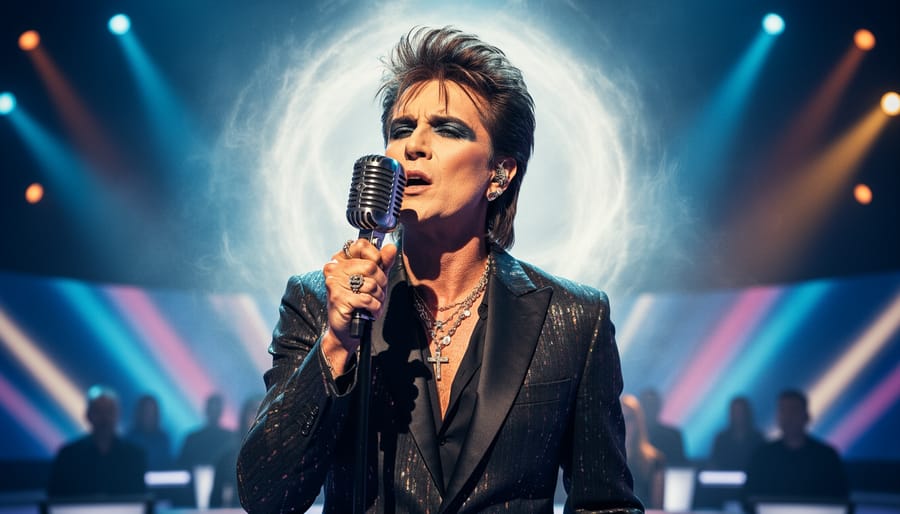
When Adam Lambert joined forces with the legendary Brian May and Roger Taylor in 2011, he didn’t try to replace Freddie Mercury. He honored him. What started as a one-off collaboration at the MTV Europe Music Awards has evolved into one of rock’s most successful partnerships, with Queen + Adam Lambert touring globally for over a decade and introducing Mercury’s genius to entirely new generations of fans.
The collaboration works because Lambert brings his own powerhouse vocals and theatrical stage presence while respecting the legacy in music that Queen built. He’s not a tribute act. He’s a world-class vocalist who happens to share Mercury’s love for drama, range, and connecting with massive audiences. Brian May has repeatedly praised Lambert’s ability to tackle Queen’s notoriously difficult catalog, and Roger Taylor has called him a “gift from God.”
For rock fans across Northern and Central BC who grew up with Queen’s anthems blasting from their truck stereos, this partnership represents something special: proof that classic rock can thrive without compromising its essence. Lambert keeps the music alive on stages worldwide while never pretending to be anyone other than himself.
When Lightning Struck: The American Idol Audition That Changed Everything
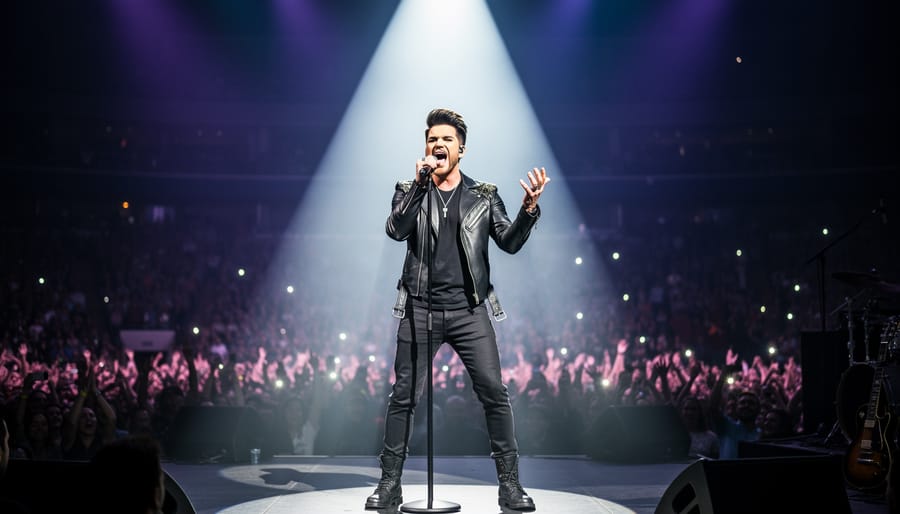
Picture this: a 27-year-old singer stepping onto the American Idol stage in early 2009, about to tackle one of rock’s most notoriously difficult songs. When Adam Lambert launched into “Bohemian Rhapsody” during his audition, he wasn’t just performing a Queen classic, he was unknowingly auditioning for the gig of a lifetime.
Lambert’s rendition showcased everything that would later make him the perfect fit for Queen. His four-octave range navigated Freddie Mercury’s vocal acrobatics with respect and power, while his theatrical flair brought genuine emotion to every shift in the song’s operatic structure. The judges were floored, but more importantly, the performance caught the attention of two legends watching from across the Atlantic.
Brian May later recalled that watching Adam’s performance gave him “goosebumps,” noting the rare combination of vocal ability and natural showmanship that reminded him why they fell in love with performing in the first place.
The connection wasn’t immediate, though. After Lambert finished as American Idol runner-up, his career took off independently. But in 2011, an opportunity emerged when Queen needed a vocalist for their European MTV Awards performance. Lambert got the call, and what was supposed to be a one-night collaboration turned into something neither party expected.
That first performance together in Belfast proved the chemistry was real. Roger Taylor and Brian May found someone who could handle Freddie’s vocal demands without attempting to impersonate him. Lambert brought his own glam-rock sensibility while clearly revering the material. The spark was undeniable, and what started as a single awards show appearance would evolve into one of rock’s most successful ongoing partnerships.
More Than a Tribute Act: What Makes This Partnership Work
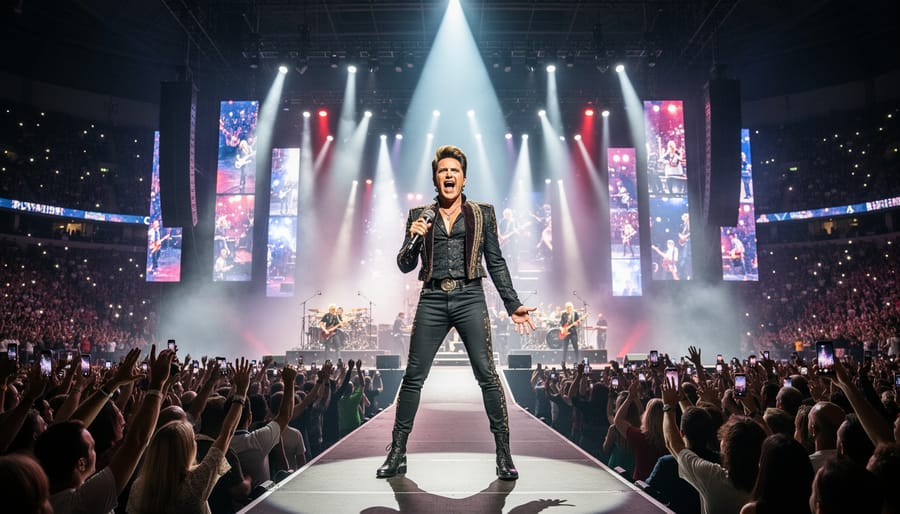
What sets Queen + Adam Lambert apart from typical legacy acts or tribute performances comes down to authenticity meeting evolution. Adam isn’t trying to be Freddie Mercury, and that’s exactly why it works.
His four-octave vocal range certainly helps. Adam can hit the operatic highs that Freddie wove into Queen’s catalogue without straining, bringing technical power that few modern rock vocalists possess. But raw ability alone doesn’t explain why 20,000 people at Rogers Arena feel like they’re witnessing something special rather than a nostalgia trip with a stand-in.
The difference lies in respect without imitation. Adam studied Freddie’s phrasing and understood the emotional weight behind songs like “Somebody to Love” or “Who Wants to Live Forever,” then found his own way into them. He adds vocal runs that feel like Adam Lambert, not Freddie Mercury karaoke. When he hits the stage in platform boots and glittering jackets, he’s channeling rock theatricality as a shared language, not copying homework.
Brian May and Roger Taylor deserve equal credit here. They didn’t want a Freddie impersonator, and they’ve been willing to adapt arrangements to suit Adam’s strengths. Roger’s drumming and Brian’s guitar work still anchor the sound, but they’ve adjusted tempos, keys, and dynamics to let Adam shine rather than forcing him into an impossible mold.
There’s also genuine chemistry. Watch them interact onstage and you’ll see mutual respect and joy, not the stiff professionalism of hired musicians running through a setlist. Brian and Roger clearly love performing again, and Adam brings an energy that makes the whole enterprise feel alive rather than preserved in amber.
This partnership works because everyone involved understands a truth that some fans took years to accept: Queen’s music was never meant to sit in a museum. It was built for stages, for crowds, for evolution. Adam Lambert isn’t replacing Freddie Mercury. He’s keeping the songs where they belong, blasting through arena speakers for people who need to hear them.
The Tours That Rocked the World
When Queen and Brian May first invited Adam Lambert to join them for a handful of performances in 2012, nobody imagined they’d still be packing stadiums together more than a decade later. That initial European tour tested the waters, could this partnership translate from television appearances to full-blown rock spectacles? The answer came in the form of sold-out arenas and crowds that sang every word.
The collaboration quickly evolved from “let’s try this” to a global phenomenon. Their first North American tour in 2014 proved that audiences weren’t just curious, they were hungry for this music performed with Lambert’s powerhouse vocals and theatrical flair. Shows stretched past the two-hour mark, with production values that rivaled anything Queen had done in their prime.
| Year | Tour Name | Notable Highlights |
|---|---|---|
| 2012 | European Tour | First full tour together; tested chemistry in major venues |
| 2014-2015 | Queen + Adam Lambert Tour | 70+ shows across North America and Australia; established the partnership |
| 2017-2018 | The Crown Jewels | Massive production with 300+ crew members; played to over 700,000 fans |
| 2019-2020 | Rhapsody Tour | Rode the Bohemian Rhapsody film wave; postponed due to pandemic |
| 2023-2024 | The Rhapsody Tour (resumed) | Return to stages worldwide; multi-generational audiences |
What sets these tours apart isn’t just the musicianship, though Brian May’s guitar solos and Roger Taylor’s drumming remain as fierce as ever. It’s the production scope. Massive LED screens display archival footage of Freddie, creating moments where past and present share the stage without feeling maudlin or exploitative. Lambert respects those moments, stepping back when appropriate, then exploding forward with his own energy.
For fans in Northern and Central BC, catching Queen + Adam Lambert means road trips to Vancouver or Edmonton, but those who’ve made the journey consistently report the same thing: this isn’t a nostalgia trip or a tribute act going through the motions. It’s a full-throttle rock show that makes you believe, just for those two hours, that rock and roll really can be timeless. The setlists shift slightly from tour to tour, keeping things fresh for repeat attendees while delivering all the anthems that first-timers demand.
The Setlist Magic: Classics Meet Contemporary Power
Every Queen + Adam Lambert show walks a careful tightrope, deliver the anthems everyone expects while throwing in enough surprises to keep longtime fans on their toes. And honestly? They’ve nailed the formula.
The core hits are non-negotiable. “We Will Rock You,” “Somebody to Love,” “Bohemian Rhapsody”, these songs built the temple, and Adam treats them with the reverence they deserve. But here’s where it gets interesting: he doesn’t just mimic Freddie’s vocal choices. On “Who Wants to Live Forever,” he leans into the song’s operatic sweep with his own phrasing, hitting those stratospheric notes in ways that feel fresh rather than imitative. The melody stays sacred, but the interpretation is unmistakably his.
The deeper cuts separate casual concert-goers from the faithful. When they pull out “I Want It All” or “Fat Bottomed Girls,” you can feel the energy shift, these are the moments that reward fans who’ve worn out their vinyl copies of News of the World. Some tours have featured “Love of My Life” with Brian May’s acoustic intro, creating an intimate pause before the chaos resumes. Others surprise with “Crazy Little Thing Called Love,” where Adam’s rockabilly swagger brings new swagger to Elvis-era Queen.
The visual spectacle matters too. Giant video screens showcase Freddie during key moments, creating duets that honor his presence without pretending to replace him. Pyrotechnics punctuate “We Will Rock You.” Roger Taylor’s drum solo becomes a centerpiece that reminds everyone why Queen always had more firepower than your average rock band.
The setlist evolves tour to tour, but the balance never wavers: enough familiarity to satisfy, enough variation to surprise.
What the Fans Are Saying (And Why It Matters)
The Queen fanbase’s journey with Adam Lambert mirrors the larger conversation about rock and tradition in modern music. Initial skepticism was inevitable, some purists viewed any collaboration as sacrilege, insisting no one could fill Freddie’s platform boots. Yet something remarkable happened as those first performances unfolded. Die-hard fans who’d sworn off the idea found themselves moved by Adam’s genuine reverence for the material combined with his refusal to impersonate. He wasn’t trying to be Freddie; he was honoring the songs while being authentically himself.
Social media tells a compelling story. Concert footage from their tours regularly goes viral, with comments sections full of fans admitting they came ready to hate it and left in tears.
The transformation is particularly evident across Northern and Central British Columbia rock communities, where classic rock radio audiences initially approached the partnership with caution. Local fans who made the pilgrimage to Vancouver or Edmonton shows returned as converts, describing stadium-shaking performances that captured Queen’s essence without attempting cheap imitation.
What’s telling is how multi-generational the audience has become. Younger fans discovering Queen through Adam’s performances attend alongside original fans who saw Freddie live. That cross-pollination matters because it keeps the music vital rather than museum-bound. The collaboration works precisely because both sides, band and audience, remained open to evolution while respecting legacy.
The Legacy Lives On: What’s Next for Queen + Adam Lambert
Queen + Adam Lambert show no signs of slowing down, and that’s exactly what keeps their partnership so vital. They’ve proven that honoring rock history doesn’t mean preserving it in amber, it means letting it breathe and connect with fans who weren’t even born when Freddie Mercury took his final bow.
Watch any of their recent shows and you’ll spot teenagers singing every word alongside their parents. That cross-generational appeal isn’t accidental. Adam’s brought Queen’s catalog to streaming platforms and social media feeds where younger audiences live, while Brian May and Roger Taylor provide the authenticity that die-hard fans demand. It’s how legacy evolves without losing its soul.
Their touring schedule remains ambitious, with stadium dates that routinely sell out months in advance. But it’s more than just nostalgia driving ticket sales, these shows deliver genuine moments of rock spectacle that feel rare in today’s music landscape.
The partnership works because nobody’s pretending this is Queen 2.0. Adam repeatedly emphasizes he’s not replacing Freddie; he’s keeping these songs alive for audiences who deserve to experience them with full power and passion. That respect, combined with undeniable chemistry between three performers who genuinely enjoy making music together, suggests Queen + Adam Lambert will continue thrilling crowds for years to come.
The Queen + Adam Lambert story proves that rock and roll doesn’t have to choose between preserving its past and pushing forward. This collaboration works because it’s built on genuine respect, extraordinary talent, and a shared belief that these songs deserve to be heard by new generations. Whether you caught Queen with Freddie in their prime or discovered them through Adam’s powerhouse performances, the music connects us all. That’s what Classic Rock Radio celebrates every day, the timeless anthems that bring our Northern and Central BC community together. Got a favorite Queen + Adam Lambert moment? Share it with us during our next Rock Block request hour, and let’s keep this conversation going.