

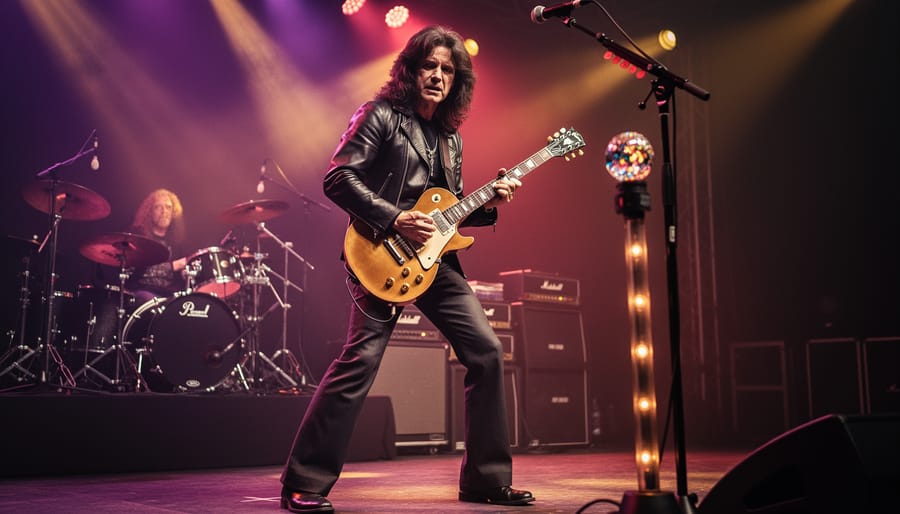
Ritchie Blackmore’s Rainbow live performance from Cologne, Germany on October 16, 1976 stands as one of the most electrifying concerts in classic rock history, capturing the guitarist at the absolute peak of his post-Deep Purple powers with a setlist that merged hard rock fury and medieval mysticism. This particular show, recorded during Rainbow’s Rising tour, has circulated among collectors for decades and remains a sought-after document of the band’s raw, uncompromising stage presence just months after their 1975 debut release established Blackmore’s new direction.
What makes the Cologne ’76 recording exceptional is the lineup itself. Ronnie James Dio commanded the stage with his operatic vocals, while Cozy Powell’s thunderous drumming and Jimmy Bain’s bass work created a rhythm section that could shake the foundations of any venue in Northern BC or beyond. The setlist pulled heavily from Rising, delivering extended versions of “Stargazer” and “A Light in the Black” that showcased why this era of Rainbow remains untouchable for many fans.
Whether you’re hunting down bootlegs or hoping for an official release, understanding what happened that night in Germany helps explain why Rainbow’s legacy endures fifty years later.
What Changed: The 1976 Cologne Recording Comes Into Focus
The 1976 Cologne concert wasn’t officially released in its time, which makes its journey to 2026 availability all the more compelling for Rainbow collectors. Originally captured during the band’s Rising tour, when they were still establishing themselves as a distinct entity separate from Deep Purple, this performance sat in the archives for decades as an audience recording that circulated among hardcore fans through bootleg channels.
What’s changed recently is the improved accessibility and quality of this specific show. While the exact nature of the 2026 release varies depending on which format surfaces (some versions stem from upgraded audience tapes, others from rediscovered soundboard sources), the Cologne recording has gained renewed attention because it captures Rainbow at a pivotal moment: right after the Rising album dropped but before the lineup shifted again. That timing matters. You’re hearing Ronnie James Dio, Cozy Powell, and Blackmore locked into material they’d been developing night after night, with none of the later personnel changes that would alter the band’s direction.
The significance isn’t just nostalgia. This concert represents Rainbow when they were hungry, lean, and proving themselves on European stages. Unlike the more polished On Stage live album released in 1977, which featured edited performances from multiple shows, the Cologne tape offers an unvarnished snapshot of a single night. The band played longer sets during this period, the arrangements were still evolving, and Blackmore’s solos stretched out in ways the studio versions couldn’t capture. For Northern BC fans who discovered Rainbow through classic rock radio, this recording fills in the gaps between the studio albums they know and the live energy that made the band legendary.
Key Developments: Breaking Down the Historic Performance
1. The Lineup That Defined Early Rainbow
The five musicians who took the stage in Cologne on October 17, 1976, represented Rainbow at its creative peak. Ritchie Blackmore had assembled a lineup that could execute his complex guitar arrangements while bringing their own fire to every performance.
Ronnie James Dio fronted the band with a vocal power that made Deep Purple’s legacy seem like a starting point rather than a limitation. His ability to hit those soaring high notes while maintaining clarity made tracks like “Stargazer” not just performable live, but transcendent. Where other vocalists might strain, Dio elevated.
Behind the kit, Cozy Powell delivered thunderous precision. His drum work wasn’t just about power, though he had plenty, it was about knowing exactly when to hold back and when to unleash those trademark fills that became part of Rainbow’s sonic signature.
The rhythm section locked together through Jimmy Bain’s bass work, which bridged Blackmore’s neo-classical tendencies with the raw edge of hard rock. Tony Carey’s keyboards added the atmospheric layers that separated Rainbow from standard guitar-driven bands of the era, particularly on extended arrangements.
This configuration lasted just over a year, but what they captured in that window shaped how fans understood Rainbow’s potential. The Cologne show caught them mid-stride through their Rising tour, confident and hungry, before lineup changes began fragmenting what Blackmore had built.
2. The Setlist and Standout Performances
The Cologne setlist captured Rainbow at their most explosive, blending the fury of Ritchie Blackmore’s Rainbow with fresh material that would soon appear on Rising. Man on the Silver Mountain opened with ferocity, Dio’s vocals cutting through Powell’s thunderous drums with a rawness the studio version only hinted at. What made this show particularly special was how the band stretched these compositions beyond their recorded forms, turning tight studio arrangements into sprawling showcases of improvisation and power.
- Stargazer, Extended to nearly ten minutes, featuring Blackmore’s most ambitious guitar work and Powell’s legendary drum solo
- Mistreated, A Deep Purple holdover transformed into a vehicle for Dio’s vocal range, stretching well past the original’s length
- Catch the Rainbow, Slowed down and haunting, showcasing the band’s dynamic range between delicate passages and crushing heaviness
- Sixteenth Century Greensleeves, The medieval-tinged instrumental given room to breathe, with Blackmore’s classical influences on full display
The live versions crackled with an urgency absent from studio takes. Blackmore’s solos wandered into uncharted territory, Powell and Bain locked into grooves that felt simultaneously tighter and looser than the recorded versions, and Dio commanded the German crowd with a confidence that came from months of relentless touring. This wasn’t a band recreating their records, it was Rainbow proving those albums were just blueprints for what they could unleash on stage.
3. The Sound Quality and Production Legacy
The Cologne 1976 recording survives as a professional soundboard capture, which puts it leagues ahead of the murky bootlegs that circulated for decades. This wasn’t some fan smuggling a tape recorder into the venue, the German broadcast crew documented the show with multi-track equipment, preserving separation between instruments that gives modern remastering engineers real material to work with.
What makes this recording stand out is the raw power they managed to capture. Cozy Powell’s drums hit with genuine impact rather than bleeding into mush, and Blackmore’s guitar cuts through without the thin, brittle quality that plagued so many ’70s live recordings. Dio’s vocals sit front and center, showcasing the control and range that made him legendary, while the rhythm section holds its own in the mix instead of disappearing entirely.
The 2026 remaster takes advantage of that solid foundation. Engineers cleaned up tape hiss without stripping away the room ambience that makes a live recording feel alive. They’ve enhanced the low-end response, something original ’70s mixing boards couldn’t handle well, so Powell’s kick drum and Bain’s bass finally register with proper weight. The result doesn’t sound artificially polished or over-compressed like some modern remasters. It sounds like being there, just with better seats.
For Northern BC rock fans who remember hearing Rainbow through AM radio static or worn vinyl, this is the closest you’ll get to hearing what actually happened on that stage fifty years ago.
Why It Matters: Rainbow’s Place in Rock History
This Cologne show captures Rainbow at their absolute peak, barely a year after the song launched Rainbow into the spotlight. When Blackmore walked away from Deep Purple in 1975, plenty of folks figured he’d lost his mind leaving one of rock’s biggest bands. But Rainbow’s 1976 touring proved him right. This lineup delivered something heavier than Purple’s blues-rock foundation, something darker and more theatrical that would directly shape what became heavy metal.
The Dio-Blackmore partnership pushed rock vocals into operatic territory while keeping the guitar work sharp and precise. Songs like ‘Stargazer’ and ‘Catch the Rainbow’ from the Rising album weren’t just hard rock, they were mini-epics that bands like Iron Maiden and Metallica studied closely. This era established the template: classically-influenced guitar, powerful high-range vocals, fantasy themes, and arrangements that built drama without losing their punch.
For those of us in Northern BC who discovered Rainbow through classic rock radio or our parents’ vinyl collections, this period represents guitar-driven rock before it splintered into a dozen subgenres. The Cologne recording preserves that moment when Blackmore’s vision was fresh, Dio’s voice was untouchable, and the band could fill a German concert hall with the kind of energy that still translates fifty years later. It’s a snapshot of where hard rock was heading, performed by the guys drawing the map.
What to Watch: Where to Find It and What’s Next
Finding the Cologne 1976 performance in 2026 requires knowing where to look and what’s legitimate. The remastered recording is available on major streaming platforms including Spotify, Apple Music, and Tidal under the official Rainbow catalog. Physical collectors should check specialty retailers for the vinyl reissue, our Rainbow vinyl guide covers what to expect from archival pressings and how to verify authenticity.
Bootleg recordings still circulate, but the official 2026 release offers superior sound quality and proper liner notes documenting the show. For those preferring digital ownership, high-resolution downloads are available through Qobuz and HDtracks.
Looking ahead, Rhino Records has hinted at a comprehensive box set covering Rainbow’s 1975-1976 touring period, potentially including additional unreleased concerts from the Rising era. The 50th anniversary of Rainbow’s formation arrives in 2025, suggesting more archival releases could surface throughout 2026.
We want to hear from Northern BC’s classic rock community, did you catch Rainbow during their 1970s tours? What’s your favorite live recording from this era? Share your memories and join our ongoing conversation about the bands that defined hard rock. Check our contest page for chances to win classic rock memorabilia and tickets to tribute shows coming to the region.
Your Questions About the Cologne 1976 Performance
The Cologne 1976 performance raises plenty of questions for fans tracking down this piece of Rainbow history. Here’s what you need to know about the recording and its place in the band’s legacy.
Was the Cologne 1976 show officially released by Rainbow?
The original concert wasn’t released as an official live album at the time. Most versions available today come from soundboard recordings or high-quality audience tapes that have circulated among collectors, though remastering efforts in recent years have improved accessibility.
How does the Cologne recording compare to “On Stage” from 1977?
The Cologne performance captures Rainbow during their Rising tour with rawer energy and a slightly different setlist emphasis. “On Stage” was professionally produced for commercial release, while Cologne offers a more immediate, unpolished snapshot of the band at their live peak.
Why was 1976 such a crucial year for Rainbow?
1976 saw Rainbow touring behind “Rising,” widely considered their masterpiece, with the definitive Dio-era lineup at full power. The band was transitioning from Deep Purple’s shadow into their own identity, combining Blackmore’s classical influences with hard rock intensity that would shape the genre for decades.
For collectors and fans in Northern BC who remember when these records first hit local shops, tracking down quality versions of this performance connects you back to that era when Rainbow was redefining what hard rock could be.